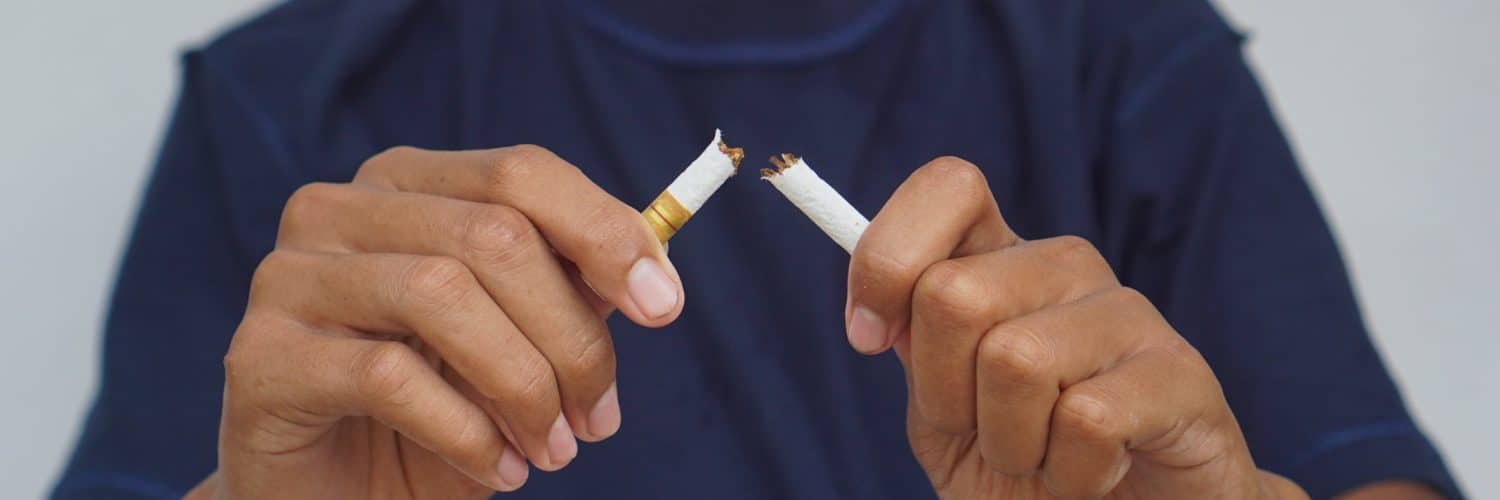
It’s never too early or too late!
If you smoke cigarettes, you may wonder whether quitting now will still make a difference. Maybe you’ve smoked for many years and think the damage is already done. Or maybe you’re younger and assume you can just quit later.
The truth is simple: Quitting improves your health at any age. Quitting earlier limits your exposure to tobacco and gives your body more time to recover, but quitting later still offers important benefits. No matter your age or how long you’ve smoked, every smoke-free day matters.
Benefits at every stage of life
Young adults: Protect your future health
Quitting now can help protect your heart and lungs and improve your physical endurance. It also lowers your future risk of smoking-related health conditions and protects the people around you from secondhand smoke.
Adults in midlife: Improve your health now
Quitting can improve circulation, which may make breathing and physical activity easier. It also lowers your risk of serious health problems caused by smoking and can help you stay active.
Older adults: Protect the years ahead
Even after decades of smoking, quitting can help you breathe easier and improve your quality of life. It may also help you stay more active and independent while lowering the risk of complications from existing health conditions.
The benefits begin soon after you quit
Here’s how your body starts to recover after your last cigarette:
- Within hours: Carbon monoxide levels in your blood begin to drop, so your blood can carry more oxygen.
- Within weeks: Circulation and lung function can improve, and physical activity may become easier.
- Over time: Your risk of serious smoking-related illnesses continues to decrease.
You may also notice other positive changes like more energy and improved taste and smell.
Save money, too! Quitting can benefit your budget as well as your health. Consider how much you spend on cigarettes over time and what you’d rather do with that money. Over weeks and months, the money you save can add up and help pay for something meaningful to you.
Find your reason. Quitting often starts because of something personal. Your reason might be connected to your health or someone you love. It might simply be that you’re ready for smoking to take up less space in your life, or money from your wallet.
Take a moment to think about what becoming smoke-free could make possible for you. Write your reason down and put it somewhere you’ll see it. When a craving hits or quitting feels hard, return to it. Your reason won’t make every moment easy, but it can remind you why the effort is worth it.
Make a plan to quit
Quitting can be challenging when smoking has become part of your daily routine. Be aware that some parts of your day may feel different without a cigarette, and cravings can make those familiar patterns harder to change.
You don’t need to have every detail figured out before you begin. A plan can help you understand what to expect and decide what you’ll do when quitting feels hard.
Here’s how to start:
- Set a quit date. Choose a day that gives you time to prepare.
- Identify your triggers. Think about when cravings are most likely to happen and what tends to bring them on. Knowing your triggers can help you prepare for them.
- Know what to expect. As your body adjusts to being without nicotine, you may feel irritable or restless or have trouble concentrating or sleeping. These withdrawal symptoms can be uncomfortable, but they generally become less intense over time.
- Plan for cravings. Think about what you’ll do when a craving hits, especially in situations when you usually smoke, such as while driving or during a work break. You might take a short walk, drink water, chew gum, or take slow, deep breaths.
- Get support. Tell someone you trust about your goal. Counseling or a support group can provide encouragement and practical help. Your workplace or health plan may also offer a quit-smoking program.
- Consider medication. Nicotine replacement products and other medications can help reduce cravings and withdrawal symptoms. If you’d like to try one, talk with your healthcare provider or pharmacist first to make sure it’s right for you.
- Keep moving forward. Every cigarette you don’t smoke is a step in the right direction. If you smoke again, it doesn’t erase your progress or mean you’ve failed. Think about what was happening at the time you had the cigarette and use what you learned to adjust your plan.
Start today!
Quitting isn’t just about giving something up. It’s an opportunity to gain more control over your health, time, and money.
For free support and resources, call 1-800-QUIT-NOW.